[ . BACK to Worldkigo TOP . ]
. Legends about Ebisu .
:::::::::::::::::::::::::::::::::::::::::::::::::::::::::::::::::::::::::::::::::::::::::::::::::::::
Ebisu えびす 恵比寿
Clay Doll of Ebisu with Daruma

Nakano Clay Doll / Hight 37 cm, width 20 cm
Ebisu is one of the seven gods of good luck.
The god of fishermen and good fortune, the smiling and bearded Ebisu is most often depicted with a
fishing rod in his right hand, with a large
red sea bream (tai) dangling from the line or tucked under his left arm. Sometimes he is also carrying a folding fan, and is often wearing a two-pointed hat (I'm not sure what these latter two objects mean, although the folding fan was waved by the emperor in a certain direction to indicate either acceptance or rejection of a request during the emperor's audiences with nobles and commoners).
In a nation very fond of fish, Ebisu is not surprisingly one of the most popular of the seven lucky gods. Ebisu is also the only deity among the seven to originate in Japan. Today he symbolizes not only safe sailing and plentiful fishing, but business prosperity for merchants in all trades. In carvings and artwork, Ebisu and Daikoku are often shown together, for Ebisu is said to be the son of Daikoku.
Read more about him here:
... Mark Schumacher
Ebisu holding a Daruma, both being symbols of Good Luck! What a happy combination!
To get such a present for the new year must bring a lot of pleasure.
There are other papermachee dolls of Ebisu and Daikoku, featured like a Daruma Doll.
Click HERE to see more of Ebisu and his companion Daikoku !
More about Ebisu and related festivals
. Ebisu and the Seven Gods of Good Luck .

Ebisu might be carrying a
. koi 鯉 carp .
He is venerated at the Ebisu Shrine 大前神社
Osaki Ebisu Jinja.
.......................................................................
Ebisu is native to Japan, his name in the Shinto Pantheon is
Kotoshiro-nushi-no-kami 事代主の神
 source : pauch.com/kss Kyoto
御穂津姫と事代主神
Mihotsu Hime and Kotoshironushi no Kami
(Miho Jinja 美保神社)
. Miho Jinja 美保神社 and Mihotsu Hime .
HIRUKO, THE LEACH CHILD (aka Ebisu) 蛭子
- - - - - HIRUKO MYTHOLOGY
KOTOSHIRONUSHI (aka Ebisu) 事代主
- Read source : Mark Schumacher -
- - - - - Ebisu seen as
. Hiruko no mikoto 蛭子命 .
Hiruko Sha 蛭子社 Hiruko Shrine, Nagasaki
:::::::::::::::::::::::::::::::::::::::::::::::::::::::::::::::::::::::::::::::::::::::::::::::::::::
Since Ebisu is the Deity venerated by fishermen, most of his shrines are near a beach.
Ebisu jinja 蛭子神社 Ebisu Shrine / Hiruko Shrine
Ebisu Shrine in Mie, a sub-shrine in the compound of 鳥出神社
Toride Jinja.
2 Chome-16-4 Tomida, Yokkaichi, Mie Prefecture 四日市市 冨田町
During the Tenpyo time of the Heian period (729 - 749) the fisherman at 富田浜 Tomida beach had a great catch and were all exited. But the joy did not last long. For two, three days, not even a small fish was caught. On the fouth day say saw a light shimmering in the water and went out to catch it in the hope to make another great catch. But this time it was not a fish, but a statue of the deity Ebisu / Hiruko.
They build the shrine in his honor there and enjoyed more good catches after that.
Festival for Hiruko 蛭子祭 : 20th day of the 6th lunar month
- reference : Ebisu Jinja -
 source : yukio on facebook
蛭子社の社殿の瓦は恵比寿
Roof tile with Ebisu
:::::::::::::::::::::::::::::::::::::::::::::::::::::::::::::::::::::::::::::::::::::::::::::::::::::
In Hakata, Ebisu is celebrated on the New Year
1月8日 初恵比須 First Ebisu on the eighth
9日 宵恵比須 Night before the Real Ebisu
10日 本恵比須 REAL
Toka Ebisu on the tenth
11日 残り恵比寿 Day after the Real Ebisu
SAIJIKI – THE NEW YEAR
- Nagasaki, Maruyama- Shrine Umezono Tenmangu 梅園天満宮
. Ebisu ishi 恵比須石 Ebisu Rock / Ebisu Stone .
talisman for egao bijin 笑顔美人 for a smiling beautiful face
.......................................................................

 Ebisu riding a Tai fish
. Nishio tsuchi ningyoo 西尾土人形 Nishio Clay Dolls .
Ebisu riding a Tai fish
. Nishio tsuchi ningyoo 西尾土人形 Nishio Clay Dolls .
Nagoya Aichi
:::::::::::::::::::::::::::::::::::::::::::::::::::::::::::::::::::::::::::::::::::::::::::::::::::::
 Ebisu hariko えびす 張子 papermachee doll
. . . CLICK here for papermachee doll Photos !
Ebisu hariko えびす 張子 papermachee doll
. . . CLICK here for papermachee doll Photos !
 Ebisu dorei えびす 土鈴 clay bell
. . . CLICK here for Photos !
Ebisu dorei えびす 土鈴 clay bell
. . . CLICK here for Photos !
 Ebisu ema えびす 絵馬 votive plaque
. . . CLICK here for Photos !
Amulets for a big catch
. Tsuri yuki anzen 釣行安全 safety when fishing .
Shichi-Fukujin 七福神 Seven Gods of Good Luck
. Amulets and Talismans from Japan .
Ebisu ema えびす 絵馬 votive plaque
. . . CLICK here for Photos !
Amulets for a big catch
. Tsuri yuki anzen 釣行安全 safety when fishing .
Shichi-Fukujin 七福神 Seven Gods of Good Luck
. Amulets and Talismans from Japan .
:::::::::::::::::::::::::::::::::::::::::::::::::::::::::::::::::::::::::::::::::::::::::::::::::::::
 The God of the Mountain and the Rice Fields
Yama no kami 山の神, ta no kami 田の神
The God of the Mountain and the Rice Fields
Yama no kami 山の神, ta no kami 田の神
In some areas, Ta no Kami is venerated as
Ebisu.
. Ebisu venerated at Mishima Shrine .
三嶋大社、三島大社 Mishima Taisha, Shizuoka
:::::::::::::::::::::::::::::::::::::::::::::::::::::::::::::::::::::::::::::::::::::::::::::::::::::::
 kosodate Ebisu 子育て(子授け)恵比須 child-protecting Ebisu
子育て(子授け)恵比須社
Saga prefecture, Hakusan 佐賀県佐賀市白山 1-3-2
- source : taishi445.blog136.fc2.com
. Amulets for Child Protection 安産子育 .
:::::::::::::::::::::::::::::::::::::::::::::::::::::::::::::::::::::::::::::::::::::::::::::::::::::::
......................... HAIKU
Ebisu 夷 恵比寿 恵比須 えびす、エビス
Kigo for Early Winter
Ebisu Ceremony Group, Ebisu-koo 恵比寿講、夷講
..... Ebisu Matsuri, 夷子祭
A "Ceremony Group" koo 講 was a group in the neighbourhood with the same religious intention of celebrating ... for example, this God Ebisu. The most famous was possibly the Ceremony Group for Mt. Fuji, Fukikoo, where the members would collect money so that some of the group could go to the annual pilgrimmage to Mt. Fuji. But this calls for a different entry!
According to the Asian Lunar calender, the celebration was on
October 20, but lately it is celebrated on any of the months in winter, with regional differences all over Japan. The God Ebisu 夷神, one of the seven gods of good luck, was identical with the God of the Mountains and the Fields in rural Japan. On this Ebisu Festival Day, Fish, Grains and Sweets were offered to the local statues of Ebisu.
Even nowadaya many stores hold a great bargain sale on the three days around the Ebisu Ceremonies.
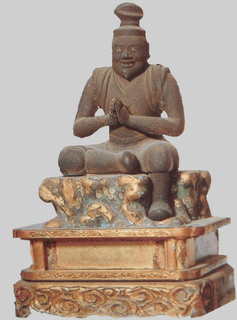
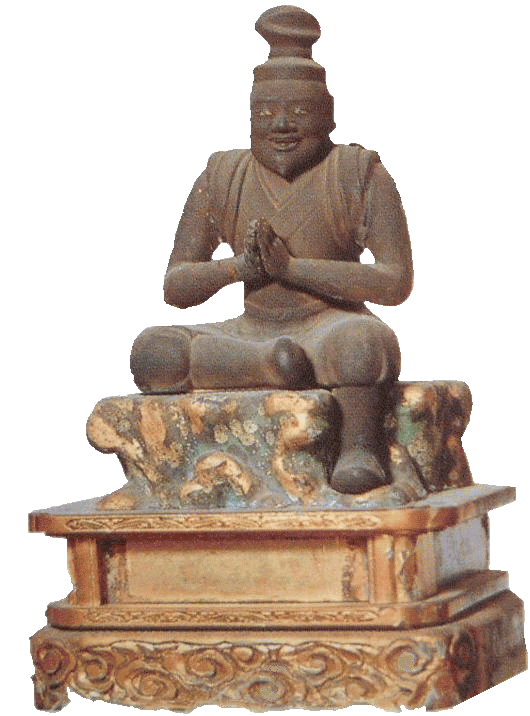
恵比寿 夷神(本覚寺)
www.syunkei.com/7_ebisu.htm
..................................................................................
. Matsuo Basho 松尾芭蕉 - Archives of the WKD .
恵比寿講酢売に袴着せにけり
Ebisu-koo su-uri ni hakama kisenikeri
Ebisu Festival:
vinegar salesman decked out
in formal wear
trans. Barnhill
. Formal trouser-skirt (hakama 袴) .
with more hokku by Basho
- - - - -
振売の鴈あはれなり恵比須講
furi uri no gan aware nari Ebisu koo / furiuri
the pathos of
the birdseller's geese:
Festival of Ebisu
Tr. Barnhill
On the 20th day of the tenth lunar month
. furiuri, furi-uri 振売 peddlers in Edo .
- - - - -
年は人にとらせていつも若夷
toshi wa hito ni torasete itsumo waka Ebisu
people have
always to get older -
ever-young Ebisu
Tr. Gabi Greve
Basho age 23
Amulets with the picture of Ebisu were sold on the first day of the New Year in Osaka. People would pin them at the entrance of their home for good luck.
In the Edo period, everyone became one year older on the first day of the New Year. Individual birthdays were not celebrated.
. Matsuo Basho 松尾芭蕉 - Archives of the WKD .
 source : www.wakaebis.co.jp
Festive sake ricewine
WAKA EBISU with this hokku by Basho as its motive.
It contains sprinkles of gold foil.
:::::::::::::::::::::::::::::::::::::::::::::::::::::::::::::::::::::::::::::::::::::::::::::::::::::::
"During this annual festival held on January 9, 10, and 11, in Osaka many people come to pay respects to Ebisu, the patron deity of business. As Osaka has been traditionally known as the merchant capital of Japan, the significance of the
Toka Ebisu Festival resonates especially strong with the people of the city. Throughout the three-day Festival, hundreds of thousands of people come to worship at the shrine and pray to Ebisu, affectionately called "
Ebessan" by Osakans."
http://yourosaka.org/other/photo/04_2.html
"A million people pass through the sixth century
Imamiya-Ebisu Shrine during the three-day January festival to pray to Ebisu (or informally, "Ebessan"), the god of business and wealth. The shrine maidens sell lucky bamboo fronds (fukusasa) loaded with lucky charms and coin talismans. Their offer is, "Buy a frond and your business will prosper." It's certainly a profitable time for the frond sellers. The highlight of the festival is "Toka Ebisu" (10th Ebisu) when colourful palanquins bear geisha and other celebrities through the lantern-lit streets."
http://www.worldeventsguide.com/event.ehtml?o=1906
There is also an Ebisu Festival held in Kyoto:
"During the Hatsuka Ebisu Festival, business people flock to
Ebisu-jinja Shrine to buy fukuzasa, branches of bamboo festooned with miniature treasure ships, rice bales, gold coins and other lucky charms. This festival celebrates Ebisu, one of the Seven Gods of Good Fortune and the patron deity of merchants.
"During the festival ebisu-bayashi music wafts through the air of the shrine and knives produced by the Oima school, well known among cooks, are put on display.
"The festival originated in the Edo period, when Kyoto merchants returning from business trips to Edo would visit this shrine to give thanks for a successful journey.
It is held only in Kyoto on October 19, 20, and 21."
http://www.kyoto.travel/events/hatsuka_ebisu_festival.html
:::::::::::::::::::::::::::::::::::::::::::::::::::::::::::::::::::::::::::::::::::::::::::::::::::::
 Ebisu Bento
source : busireso.com/lunch-photo
Ebisu Bento
source : busireso.com/lunch-photo
:::::::::::::::::::::::::::::::::::::::::::::::::::::::::::::::::::::::::::::::::::::::::::::::::::::
Kigo for the New Year
Ebisu Doll Show, Ebisu oroshi 夷おろし
..... Ebisu kaki 夷かき
Small shows by the roadside where quite popular in Edo. Little paper dolls or clay dolls were moved on a box, a lucky story was told and afterward the performer got a bit of money.
ooo ooo ooo ooo ooo ooo ooo ooo ooo ooo ooo ooo
"Young Ebisu", waka Ebisu 若夷 わかえびす、 若えびす
Welcoming Young Ebisu, waka Ebisu mukae 若夷迎
After praying to a statue of God Ebisu 夷神, people would walk around on the morning of January first with little clay dolls or paper slips with Ebisu paintings, shouting "Young Ebisu, young Ebisu". The buyer could put the doll on his God's Shelf (kamidana 神棚) and pray for his home. Putting a doll or paper by the side of the entrance door was another possibility to lure good luck to the home. If you do that, you would not age yourself for one year ... or so they said !
年や人にとられていつも若ゑびす
toshi ya hito ni toraete itsumo waka Ebisu
another year !
others get older but he stays
always a Young Ebisu
(Tr. Gabi Greve)
Matsuo Basho
寛文6年作。23歳。
若夷は、えびすさまの絵を描いた紙札で、上方では正月元旦の朝夷売りが町々を回って売り歩く。人々はこれを買って門口に張り出して、新しい年の福を呼びこもうと待ち構えている。
毎年正月に売りに来る夷様の紙札の顔は一向に年を取らない。これは、あまり御札がよく売れて、正月には取るべき歳を取っている暇がないからじゃないだろうか。
そんな馬鹿なことはなかろうが、滑稽を強調した作。若さがにじみ出ているが、後の芭蕉を知るものには何とも素人臭い作品。
http://www.ese.yamanashi.ac.jp/~itoyo/basho/haikusyu/ebisu.htm
:::::::::::::::::::::::::::::::::::::::::::::::::::::::::::::::::::::::::::::::::::::::::::::::::::::
Kigo for the New Year
Ebisu, Ceremony for the God of Wealth and Prosperity
..... Kairaishi 傀儡師, 傀儡, 夷廻し,木傀廻し puppeteer
..... Visiting the Seven Gods of Good Luck, shichi fukujin mairi 七福神詣
..... 七福詣, 福神詣, 福神巡り, 福詣
Palanquin of fortunes, hoikago宝恵駕, hoekago 宝恵駕籠*
Ebisu palanquin, Ebisu kago 戎籠(えびすかご)
Palanquin for Fukusuke, Fukusuke kago 福助駕(ふくすけかご)
Itsuka Ebisu 五日戎 (いつかえびす)
Ebisu on January 5
Hatsuka Ebisu 二十日戎 (はつかえびす)
Ebisu on January 20
hatsuka Ebisu matsuri 二十日戎祭(はつかえびすまつり)
Ebisu Ceremonies in Edo and the Kanto area
Tooka Ebisu 十日戎 (とおかえびす)
Ebisu on January 10
(in the Kansai area)
hatsu Ebisu 初戎(はつえびす)first Ebisu rituals
yoi Ebisu 宵戎(よいえびす),
Ebisu matsuri 戎祭(えびすまつり)Ebisu festival
nokori Ebisu 残り戎(のこりえびす)"left over Ebisu"
nokorifuku, nokori fuku 残り福(のこりふく)
..... fukusasa 福笹(ふくささ)lucky bamboo grass
Ebisu sasa 戎笹(えびすささ)
fukuame, fuku ame 福飴(ふくあめ)"sweets for good luck"
kichoo 吉兆(きっちょう)"good omen"
Nishinomiya no igomori 西宮の居籠 (にしのみやのいごもり)
recluse at Nishinomiya
..... igomori 居籠(いごもり)
In Nishinomiya town, Hyogo prefecture, at the shrine Ebisu Jinja.
In the night of January 9/10.
The main deity from Ebish shrine is brought to the shrine Hirota Jinja 広田神社.
People who see the procession will be blessed in the coming year.
. Daikoku and Ebisu 大黒と恵比寿 art motives .
SAIJIKI – THE NEW YEAR
:::::::::::::::::::::::::::::::::::::::::::::::::::::::::::::::::::::::::::::::::::::::::::::::::::::
Kigo for the Late Autumn
. Absolving of lies 誓文払 seimonbarai .
..... Ebisugire, Ebisu gire 夷切れ(えびすぎれ)
at shrine Kanjaden 官者殿 in Kyoto
:::::::::::::::::::::::::::::::::::::::::::::::::::::::::::::::::::::::::::::::::::::::::::::::::::::
Kobayashi Issa 小林一茶
うら町や貧乏徳りの夷講
uramachi ya binboo tokuri no Ebisu koo
back alley--
a poor sake bottle
for the God of Wealth
門の松おろしや夷の魂消べし
kado no matsu oroshi ya ebisu no tamage-beshi
down comes my New Year's pine--
let the God of Wealth
be shocked!
本町や夷の飯の横がすみ
Honchoo ya Ebisu no meshi no yoko-gasumi
Old Quarter--
food for the God of Wealth
in mist
Issa (Tr. David Lanoue)
There were so many food offering to Ebisu-san that the large volume of mist occurred by the food and formed the mist that drifted with wind.This symbolized the prosperity of the Ebisu-shrine as well as Honcho of Nihon bashi in the center commercial district in Edo.
Nakamura Sakuo
:::::::::::::::::::::::::::::::::::::::::::::::::::::::::::::::::::::::::::::::::::::::::::::::::::::
Laughing, Lucky Laugh (fuku warai)
First laugh (hatsu warai). first cry (hatsu naki).
Celebrating Ebisu, Good of Good Luck.
:::::::::::::::::::::::::::::::::::::::::::::::::::::::::::::::::::::::::::::::::::::::::::::::::::::
. WASHOKU
Umi no sachi : food treasures of the sea 海の幸
and Ebisu sama
. Ebisu Beer エビスビール / 恵比寿ビール Yebisu Beer .
 The great festival of Ebisu "Ebessan"
胡子大祭(えべっさん)
In Nishinomiya, Hiroshima prefecture
西宮神社(兵庫県西宮市)
On January 8, a large tuna fish is offered to the deity. The visitore place their offering money coins on the fish and pray for good business.
This festival started in 1970.
. . . CLICK here for Photos !
:::::::::::::::::::::::::::::::::::::::::::::::::::::::::::::::::::::::::::::::::::::::::::::::::::::
:::::::::::::::::::::::::::::::::::::::::::::::::::::::::::::::::::::::::::::::::::::::::::::::::::::
 Ebisu
Ebisu
Rein japanische Gottheit.
E bedeutet Liebe,
BI bedeutet Schönheit und
SU bedeutet alltägliche Notwendigkeiten. Ältester Sohn (
Hiruko) der japanischen Gottheiten Izanagi und Izanami no Mikoto. Als Kind auf einem Schilfboot ausgesetzt, kommt in der Gegend von Osaka an Land; daher auch Gottheit der Fischer.
Im buddhistischen Pantheon als Inkarnation der Kannon, vom Weltberg des Südens, Fudaraku, kommend.
Zusammen mit Daikokuten als Doppelfigur.
Ikonografie:
Mit Entenmuschel-Mütze; in Jagdgewändern.
Meist rundes, lächelndes Gesicht.
Mit großem Fisch und langer Angelrute.
BACK TO
Buddhastatuen ... Who is Who
Buddhistische Kultgegenstände Japans
:::::::::::::::::::::::::::::::::::::::::::::::::::::::::::::::::::::::::::::::::::::::::::::::::::::
. Legends about Ebisu .
. Ebisu and the Seven Gods of Good Luck .
. Shichifukujin 七福神 amulets and toys .
[ . BACK to WORLDKIGO TOP . ]
[ . BACK to DARUMA MUSEUM TOP . ]
- #ebisu #hiruko -
:::::::::::::::::::::::::::::::::::::::::::::::::::::::::::::::::::::::::::::::::::::::::::::::::::::






 Posts
Posts


